The truth is out there, here, there and everywhere
The sector has and is, obsessed with tenant satisfaction. Every housing association talks about the “voice of the resident,” advertises its customer panels, and promotes the idea that it is hungry for feedback. On paper, it paints a picture of an industry that is open, honest, even eager for criticism.
But the reality is very different. Like the tenant satisfaction measures themselves, residents are increasingly reluctant to engage — and who can blame them? These surveys rarely lead to meaningful outcomes.
What is missing is depth — a hands-on understanding of lived experience. A survey cannot tell you that. Residents know this. They know the feedback they provide will not go anywhere. This reputation has been earned over years of inaction.
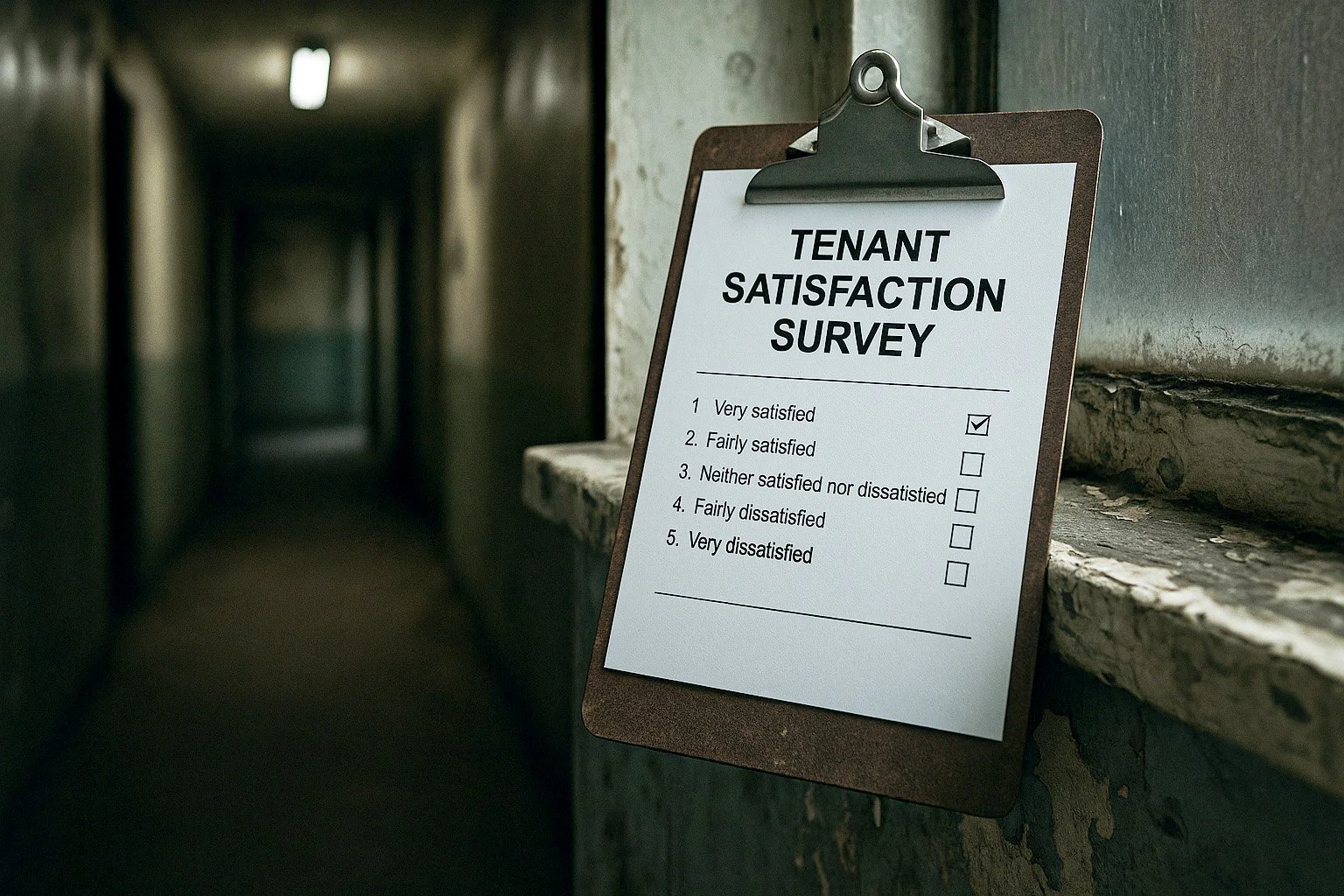
Despite low response rates, housing associations quickly repurpose what little data they get as a corporate shield. Glossy PDFs, charts, and marketing lines paint a picture of progress and improvement, regardless of reality on the ground.
Recent examples confirm this. Sue Phillips called for shared ownership feedback — almost no response. A contact of mine reached out on behalf of The Chartered Institute of Housing — again, minimal engagement. The Stop Social Housing Stigma campaign rightly struggles too. People see these bodies as part of the same echo chamber.
The Regulator of Social Housing is supposed to monitor standards, enforce compliance, and intervene when landlords fail. In practice, tenants rarely see it as a route to meaningful change.
Fiona McGregor is still in post — and this matters, because her recent appearance before the Housing, Communities and Local Government Committee was revealing.
During the evidence session, Conservative MP Louis Cocking challenged her directly. He accused the regulator of offering “waffle,” giving no deadlines, relying on paperwork, conducting inspections with six weeks’ notice, and failing to improve the lives of tenants. He said he had “no confidence” the regulator holds landlords to account, even citing horrific housing conditions in a C1-rated authority.
This exchange exposed the central problem: the regulator is structured to avoid destabilising the sector. Anything that threatens financial stability or investor confidence is approached cautiously. Protecting the balance sheet takes precedence over protecting tenants.
This weakness is equally visible in the Ombudsman process. My own recent referral will likely take twelve to eighteen months. By the time judgments land, leadership distances itself easily: that was years ago; systems have changed; staff have moved on.
Meanwhile, residents live with the consequences: rising charges, damp, mould, fire safety risks, leaks, and homes unfit for habitation. Accountability pauses; risk does not.
This cycle — failure, complaints, documentation, minimal change — is now well established.
Residents are exhausted. They’ve filled out surveys, forms and feedback requests for decades. Little has changed. Housing associations continue to perform engagement rituals that generate plenty of paperwork and very little action.
Engagement has become performance theatre. Communications teams polish limited feedback into something that can be marketed. Panels and resident ambassadors create the illusion of representation, while real issues remain unresolved.
Southern Housing shows the scale of the problem. Their own Tenant Satisfaction Measures tell a story of distrust, but their behaviour tells the deeper truth.
Their recent video — mocking someone “who doesn’t believe in shared ownership” — shows staff laughing at sceptical shared owners and prospective buyers. At a time when many shared owners cannot sell, cannot move, and face rising service charges, Southern Housing chose to treat them as a punchline.
Their statistics reinforce the problem
• Only 32% of shared owners are satisfied
• Only 16% satisfied with complaint handling
• Only 27% believe Southern listens
Add to that the Ombudsman’s findings of 79 percent maladministration and 92 percent failure in complaint handling, and the scale is clear.
This isn’t a communications failure. It’s a credibility failure.
Housing associations continue to promote customer panels, board members and “listening sessions,” but the voices they most need to hear — outspoken, informed, evidence-based residents — are the ones they push aside.
My own experience with GreenSquareAccord shows this. When challenged with evidence and Ombudsman findings, they escalated: two failed court cases, a false arrest, SLAPP-style tactics and attempts to discredit me. They withdrew from X not because of “hate” but because residents raised concerns publicly.
They’re now advertising an £11,000 resident board member post as though representation must be bought. They already have endless feedback. The problem is not silence — it is selective hearing.
The real voice of the customer is not in your surveys. It is in the people you ignore. People have stopped engaging not because they don’t care, but because the system has shown repeatedly that it does not listen.
Residents are still living in unsafe and unaffordable homes. Complaints escalate to courts. Service charges are withheld. Failures are documented publicly. These outcomes cannot be spun away.
If the sector wants to rebuild trust, it must start by acknowledging that trust is broken.
So go on, hug a critic. Listen to the voices you’ve failed to silence, our reluctant heroes. If you are genuinely interested in providing a service that benefits communities and provides homes we can all be proud of, then stop pretending and start engaging with those who are brave enough to call you out. Can you prove you’re as brave as us? Go on — I dare you.
Response from Southern Housing – and Why It Raises Further Concern
Southern Housing have now issued a response to the video. Their statement apologises “for any offence caused,” describes the video as part of a “myth-busting” exercise, and suggests the issue may have been misinterpreted. The video has since been removed.
This response causes more concern than reassurance.
It avoids the substance of the criticism. The issue was not “offence” or misunderstanding — it was the decision to film and publish staff openly mocking people who question shared ownership, including their own existing customers and those considering entering the scheme. Framing this as misinterpretation sidesteps accountability and minimises the behaviour shown.
Their wording echoes a familiar pattern across the sector: narrative control. Rather than acknowledging the cultural issue behind the video, the response redirects attention to “intent,” presents the content as an attempt to “debunk myths,” and avoids any reflection on why residents found it troubling in the first place.
In doing so, Southern Housing’s reply reinforces the core point of this blog: the sector remains more focused on managing perception than addressing the realities residents face. This selective, low-visibility response strengthens the argument that housing associations still treat resident voice as something to control, not something to listen to.